
FAQs
What are the main strengths of Wance?
What are the main strengths of Wance?
We work with a team of more than 450 people across our Shenzhen and Wuhan R&D and manufacturing bases. Over the years, our engineers have developed more than 200 patented technologies, supported by a technical team of over 90 specialists.
What payment methods and trade terms are available?
What payment methods and trade terms are available?
We accept T/T and 100% irrevocable L/C at sight. Standard trade terms include EXW, FCA, FOB, CIF and CFR. DAP and DDP can also be arranged depending on the project and destination.
What is the typical delivery time?
What is the typical delivery time?
Standard material testing machines are usually shipped within 30 working days. For testing equipment with special configurations, the delivery time may extend to around 60 working days. Fully customized testing systems will be scheduled according to project requirements.
How are the goods packaged for shipping?
How are the goods packaged for shipping?
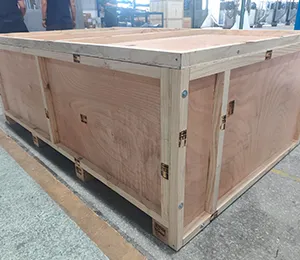
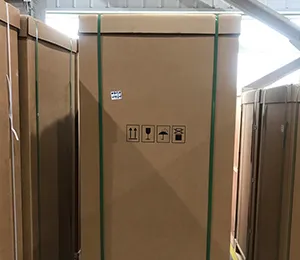
The testing equipment is packaged in export-grade, fumigated wooden crates to ensure its safety during international shipping. In order to provide safe handling and protection during transit, accessories under 10 kilograms are shipped in sturdy, reinforced cartons.
What is the warranty period for the products?
What is the warranty period for the products?
Under normal conditions, we provide a one-year warranty. If extended coverage is required, the warranty can be prolonged with an additional annual fee of 5%.
How to proceed if the testing equipment has issues during the warranty period?How to proceed if the testing equipment has issues during the warranty period?
How to proceed if the testing equipment has issues during the warranty period?How to proceed if the testing equipment has issues during the warranty period?
Clients may contact their regional sales representative or local distributor. When an issue is not caused by improper use, replacement parts are supplied free of charge until the equipment is restored to normal operation.
How are repairs handled once the warranty has expired?
How are repairs handled once the warranty has expired?
Only the cost of the replacement parts is charged. If on-site service is needed, the fee is agreed upon with the client in advance. Although there are more than a thousand testing machines operating overseas, fewer than 0.1% require an on-site visit each year.
How is after-sales support arranged for international clients?
How is after-sales support arranged for international clients?
In regions where we work with authorized distributors, on-site follow-up visits are carried out every three months. In regions without a local distributor, the same follow-up schedule is maintained through phone or email. Any questions raised by clients are handled promptly, and practical feedback is reviewed as part of our ongoing effort to improve product quality and service.
Does Wance participate in international exhibitions?
Does Wance participate in international exhibitions?
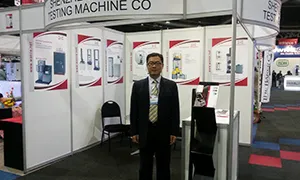
Most of our distributors participate in major local exhibitions focused on quality control, composites, and plastics, helping introduce the Wance brand to users in their markets in a more direct and effective way. We also participate directly in selected international industry events when appropriate.
Can the electromechanical universal testing machine test highly flexible materials such as rubber?
Can the electromechanical universal testing machine test highly flexible materials such as rubber?
Yes. The electromechanical universal testing machine can be configured with specialized grips for soft materials and paired with large-deformation extensometers. This setup ensures stable gripping and highly accurate measurements when testing materials with significant elongation.
Is the universal testing machine suitable for scientific research requiring custom loading programs and multiple control modes?
Is the universal testing machine suitable for scientific research requiring custom loading programs and multiple control modes?
Yes. The system supports stress, strain, and displacement control modes, and enables fully programmable loading sequences for complex test paths. This flexibility makes it ideal for universities and research institutes conducting advanced studies on emerging materials.
Can it meet high repeatability and traceability requirements for metal component testing in mechanical manufacturing?
Can it meet high repeatability and traceability requirements for metal component testing in mechanical manufacturing?
Absolutely. Equipped with internationally recognized load cells and high-precision optical encoders, the testing machine delivers force-measurement accuracy within ±0.5%. Automated data acquisition, real-time curve generation, and full traceability functions provide the consistency and documentation required for industrial-grade quality assurance.
Is it suitable for battery-material testing (separator films, electrode coatings, aluminum-plastic films) in new energy companies?
Is it suitable for battery-material testing (separator films, electrode coatings, aluminum-plastic films) in new energy companies?
Yes. The machine offers force accuracy in class 0.5, full stress/strain control modes, and a comprehensive range of specialized grips. It supports tensile, friction, puncture, peel, and impact testing, covering the entire lifecycle of battery materials from raw films to finished products.
Can it be used for tensile and compression testing of building materials such as rebar, cement, and concrete components?
Can it be used for tensile and compression testing of building materials such as rebar, cement, and concrete components?
Yes. The high-rigidity dual-column frame, paired with a precision load-measurement system, maintains accuracy better than ±0.5% under both tensile and compressive loading conditions. Peak force and deformation are automatically captured, making the system highly suitable for construction-material testing laboratories and structural research applications.
Is the servo-hydraulic universal testing machine suitable for tensile, compression, and bending tests of rebar, cement, and concrete components?
Is the servo-hydraulic universal testing machine suitable for tensile, compression, and bending tests of rebar, cement, and concrete components?
Yes. The servo-hydraulic universal testing machine combines a high-stiffness load frame with a servo-hydraulic proportional control system, delivering stable and precise force and displacement control under high-load conditions. It is highly suitable for mechanical testing of construction steel, cement components, and concrete specimens.
Can the machine accurately measure yield strength and ultimate strength of steel and alloy materials?
Can the machine accurately measure yield strength and ultimate strength of steel and alloy materials?
Absolutely. With a high-response servo valve and a high-precision load cell, the machine delivers full-range force accuracy better than ±0.5% from 1-100% FS. This ensures highly accurate loading control and dependable detection of yield points, strain-hardening behavior, and fracture force.
Can the servo-hydraulic universal testing machine support advanced loading modes for research applications?
Can the servo-hydraulic universal testing machine support advanced loading modes for research applications?
Yes. The controller offers three closed-loop control modes (force, displacement, and strain) and supports fully programmable loading sequences. Features such as stress hold, displacement hold, ramp control, and multi-step loading paths enable complex, customizable test procedures, making the system ideal for advanced material research and academic experimentation.
For automotive and railway manufacturers requiring fast response and stable loading for structural component testing, how does the servo-hydraulic system perform?
For automotive and railway manufacturers requiring fast response and stable loading for structural component testing, how does the servo-hydraulic system perform?
The system utilizes a high-sensitivity servo-hydraulic proportional valve to deliver fast, smooth, and impact-free loading.
This ensures highly stable control under dynamic or complex loading conditions, making it well suited for strength validation of vehicle components, structural assemblies, and railway system parts.
Is the pendulum impact testing machine suitable for building steels and structural components, especially for low-temperature toughness evaluation?
Is the pendulum impact testing machine suitable for building steels and structural components, especially for low-temperature toughness evaluation?
Yes. A high-stiffness frame combined with a low-friction pendulum shaft enables precise measurement of absorbed energy and fracture toughness for structural steels, cement, and construction components across a wide temperature range. With microcomputer control, the system automatically calculates impact strength, ensuring accurate and reliable test results for engineering applications.
Can the machine ensure data consistency for batch testing of steel, aluminum alloys, and other metals?
Can the machine ensure data consistency for batch testing of steel, aluminum alloys, and other metals?
Absolutely. Equipped with a high-precision angular displacement sensor and an automatic energy-calculation system, the machine delivers accurate and repeatable measurements of absorbed energy and impact strength. This makes it particularly well suited for batch consistency evaluation in metallurgical and mechanical manufacturing industries.
Can the machine capture the full impact curve and fracture characteristics required for research institutions developing new materials?
Can the machine capture the full impact curve and fracture characteristics required for research institutions developing new materials?
Yes. The system supports high-speed data acquisition and can generate full force-time or energy-time curves for the entire impact event. This enables detailed analysis of fracture behavior, crack propagation, and ductile-brittle transition characteristics, meeting the needs of advanced materials research.
Is the machine reliable for evaluating the impact safety performance of automotive and railway components, especially welded parts and structural assemblies?
Is the machine reliable for evaluating the impact safety performance of automotive and railway components, especially welded parts and structural assemblies?
Yes. Automatic pendulum lifting, precise braking mechanisms, and a fully enclosed protective housing ensure safe, efficient operation during high-energy impact tests. The machine delivers stable performance across 150J to 750J energy ranges, making it highly suitable for evaluating welded joints, safety-critical components, and structural assemblies in automotive, railway, and transportation sectors.
Can the drop weight impact tester meet the requirements for impact energy absorption and fracture toughness testing of steel plates, welded plates, and structural steels in steelmaking and metallurgy?
Can the drop weight impact tester meet the requirements for impact energy absorption and fracture toughness testing of steel plates, welded plates, and structural steels in steelmaking and metallurgy?
Yes. The drop weight impact tester provides high-energy impact loading, high-speed data acquisition, and synchronized force-displacement-energy measurement. It accurately evaluates the absorbed energy and fracture toughness of steel plates, welded joints, and structural steels.
The system complies with GB/T 4156, ASTM E23, and ISO 148, making it suitable for material R&D, quality control, and low-temperature toughness assessment.
The system complies with GB/T 4156, ASTM E23, and ISO 148, making it suitable for material R&D, quality control, and low-temperature toughness assessment.
Is the drop weight impact tester suitable for evaluating the impact resistance of composite materials such as carbon-fiber laminates and honeycomb sandwich structures?
Is the drop weight impact tester suitable for evaluating the impact resistance of composite materials such as carbon-fiber laminates and honeycomb sandwich structures?
Yes. The tester features an adjustable-energy drop-weight loading system and a high-frequency data acquisition module (up to 2 MHz), enabling full-process recording of force, displacement, and absorbed energy curves.
It provides accurate assessment of low-velocity impact damage initiation, energy absorption, and damage tolerance in composite laminates and sandwich structures.
The system meets ASTM D7136/D7137 and GB/T 35465, making it ideal for aerospace, new-energy vehicles, and high-performance composite R&D.
It provides accurate assessment of low-velocity impact damage initiation, energy absorption, and damage tolerance in composite laminates and sandwich structures.
The system meets ASTM D7136/D7137 and GB/T 35465, making it ideal for aerospace, new-energy vehicles, and high-performance composite R&D.
Is the drop weight impact tester suitable for evaluating the impact strength and toughness of thermoplastic pipes such as PVC, PE, and PP-R?
Is the drop weight impact tester suitable for evaluating the impact strength and toughness of thermoplastic pipes such as PVC, PE, and PP-R?
Yes. The tester is equipped with precise height control and adjustable impact energy, supporting free-fall impact testing for pipes of various diameters.
It also performs TIR (Total Indicated Rate) failure analysis and complies with GB/T 14152, ISO 3127, and ASTM D2444.
It is widely used for assessing the impact resistance, low-temperature toughness, and quality consistency of PVC, PE, PP-R pipes and fittings—making it suitable for manufacturing quality control and third-party certification labs.
It also performs TIR (Total Indicated Rate) failure analysis and complies with GB/T 14152, ISO 3127, and ASTM D2444.
It is widely used for assessing the impact resistance, low-temperature toughness, and quality consistency of PVC, PE, PP-R pipes and fittings—making it suitable for manufacturing quality control and third-party certification labs.
Do research laboratories benefit from automated curve generation and material comparison features provided by the drop weight impact tester?
Do research laboratories benefit from automated curve generation and material comparison features provided by the drop weight impact tester?
Yes. The tester includes an integrated data acquisition and analysis software suite that automatically generates force-time curves, calculates absorbed energy, and exports complete test reports.
This enables researchers to conduct clear, visual, and quantitative comparisons of material performance across different formulations, temperatures, or test conditions.
This enables researchers to conduct clear, visual, and quantitative comparisons of material performance across different formulations, temperatures, or test conditions.
Are dynamic fatigue testing machines suitable for evaluating the fatigue life of structural metals used in construction?
Are dynamic fatigue testing machines suitable for evaluating the fatigue life of structural metals used in construction?
Yes. Dynamic fatigue testing machines feature a servo-hydraulic closed-loop control system combined with a high-stiffness load frame, enabling precise simulation of cyclic loading experienced by building steel structures.
This allows accurate assessment of fatigue life, durability, and long-term structural reliability.
Metallurgical and mechanical manufacturers need to study the fatigue strength and fracture limits of metals. Can the fatigue testing machine achieve accurate cyclic control?
Metallurgical and mechanical manufacturers need to study the fatigue strength and fracture limits of metals. Can the fatigue testing machine achieve accurate cyclic control?
Absolutely. Dynamic fatigue systems are equipped with full-digital servo control and dynamic force closed-loop regulation, providing: High-precision stress or strain cycling; Long-duration, high-cycle operation; Excellent stability and repeatability.
Can dynamic fatigue testing machines simulate real-world service conditions for automotive and rail components (suspension parts, bearings, structural assemblies)?
Can dynamic fatigue testing machines simulate real-world service conditions for automotive and rail components (suspension parts, bearings, structural assemblies)?
Yes. Dynamic fatigue system uses high-frequency servo-hydraulic actuators and optional multi-channel synchronous control, enabling replication of complex real-world loading such as road-induced vibration, multiaxial fatigue loading, random loading spectra and long-cycle durability tests.
Are dynamic fatigue testers suitable for aerospace applications such as composite structures and crack-growth research?
Are dynamic fatigue testers suitable for aerospace applications such as composite structures and crack-growth research?
Yes. Aerospace-grade fatigue systems offer high-frequency sinusoidal, triangular, random, and programmable loading. The tester features high-sensitivity force & displacement sensors, broad frequency bandwidth. This makes them ideal for composite fatigue lifetime studies, crack initiation and propagation (fracture mechanics), and high-cycle loading of aircraft structural components.
Can dynamic fatigue systems perform precise small-deformation cyclic testing required for rubber, elastomers, and polymers?
Can dynamic fatigue systems perform precise small-deformation cyclic testing required for rubber, elastomers, and polymers?
Yes. Dynamic fatigue testing machines are fully capable of performing precise small-deformation cyclic tests required for rubber, elastomers, and polymer components.